http://cgi.ebay.com/ws/eBayISAPI.dll?ViewItem&item=270545732944
Monday, March 29, 2010
Novel Items on e-bay??
http://cgi.ebay.com/ws/eBayISAPI.dll?ViewItem&item=270545732944
Friday, March 19, 2010
As a seller
I am an avid online seller, selling on average 1-2 items per month on several online websites (Strictly Supreme, Hypebeast, Superfuture, etc...). The reason why I sell my items online, as opposed to in person or locally, is because living in Regina, there are less than a quarter of a million citizens. Many of the items I sell are for niche markets, and do not appeal to the general population, and so there are very few (if any) people locally who would be interested in these items. However, the Internet connects people from all over the world, and facilitates both communication and
transaction between buyers and sellers. The Internet has over a billion users, and with websites that cater towards certain niches and interests, it is easy to find other people who want what you are selling. For example, I often buy and sell hats and clothing of a particular brand that is only has two stores in North America. Due to the low quantity of the items, they are very rare and sought out among collectors and enthusiasts. However, I soon discovered that there was
an online BBS style website specifically for users who wish to buy, sell, and trade items of that brand name. So, on this website, when I add an item for sale, I know that all the people who browse through and see my item are seeking that item or similar items, and so it is much easier to sell, and the selling price is much higher than one would expect from a buyer who was not aware of the limited quantities of that item.
The selling process that I partake in involves creating a thread style listing, including a detailed description of the item, at least 2 photos with a “tagged id”, and a price. The thread can be found in sub-forums based on the type of item. For example, there is a sub-forum for pullovers, and one for fitted caps as well. Once the listing is set-up, other users can view it and contact me via e-mail or private message. The website facilitates communication with private messages, and so the buyer will make offers and
give information such as payment method and shipping address through these messages. Personally, I accept payments through a PayPal account, which is directly connected to my credit card. Once payment is received for an item, I will package and mail the item to the specified address, and that is the end of my role as a seller.
As a seller, I feel very safe because I won’t ship an item until payment is received. So far, I have not been scammed in any way. The precautions I take as a seller are few: I establish good communication with a buyer, and I wait to receive the payment before shipping the item.
As a buyer
As a buyer, on the other hand, the precautions I take are many. There are many scams and scamming users who take payment for an item but do not ship it to the buyer, or ship a different item then described. It is easy to spot these types of listings if you have some experience. The listings will typically contain photos taken from another website or not taken on their own or prices which are below average market prices. Another give away is the behavior of the user. Generally a scammer does not reply messages quickly (within 24 hours), accepts even very low offers, and is generally in a rush to receive payment and does not ask questions such as “Where are you located?” or “What type of shipping do you prefer?” With these precautions I have been able to avoid being scammed.
Communication Between Buyer's and Sellers
With online shopping, transactions are made in a fluid and dynamic manner. The communication between buyer and seller is surprisingly casual, and the use of very informal language is frequent. To demonstrate this point, I have transcribed the negotiations I have had with other online shoppers, both as a buyer and as a seller (with the permission of the other parties)
As a seller
As you can see, the language used is both informal and full of spelling errors. This may come as surprising to many people, but this is often how communication is handled with online shoppers - especially on listings websites. The item for sale was a red fitted hat:Buyer: Ill go 40 lmk
Seller: where are u located? So I can check the exact shipping
Buyer: Its [city] tx [zipcode]
Seller: aight, with that I can do $42 + 4% USD on Paypal
Buyer: $40+4% USD, deal or no?
Seller: Cool, send it to [seller e-mail]. Also, lemme know the address exactly as it should appear on the label. I can have it out tomorrow or the next day depending when I receive the payment and address.
Buyer: Alright thats cool i just sent the money over and my info is
[Buyer Name]
[Buyer address]
Seller: Hey, I just sent that out today. From my experience, it generally takes about 3 weeks for the package to get from Canada to USA. Lemme know when you get it.
Buyer: alright cool I’ll let you know
(two weeks later)
Buyer: yea i got it 2 days ago its great thanks man
The hat was listed for less than 24 hours before the offer was made. Key points in my listing was the fact that the hat was listed at average market value. Often times, sellers will list their items at a high price, but will lower it due to lack of offers. This method often does not work, and against common belief, it will resulting in a lower selling price then if you originally list the item at average market value. I generally do not sell an item unless I feel comfortable giving it up at an average market price. This general sales tactic has allowed me to sell nearly all of my items in under 24 hours. In fact, I sold an item for $20 higher then the listed price; the buyer wanted to offer a higher price to ensure that he would be buying the hat, in case others also had offers.
As a Buyer
Buyer: I'd be willing to trade. I have a 8.5/10 red box logo 7 1/4, dotted black/grey camp hat, and an olive ransom camp hat, and black skull x supreme t-shirt collab.
Seller: Thanks for the offer, but mainly looking for cash.
(several weeks later)
Buyer: Yo, you got this? $50 shipped to Canada.
Seller: Sorry for the late response.
YES, I do have it.
Please send the payment (as gift) to [seller e-mail]
Thanks!!!Buyer: Sorry, $50 sent as payment for goods. I don't send as gift in case there is a problem and I need to dispute it with paypal.
Seller: aight that's cool.
As you can see, communication is casual and informal. Also, notice that I originally did not offer any cash because the item was listed at above market value. As weeks went on without selling this item, the seller repeatedly lowered the BIN (buy it now) price. This act is usually a sign of desperation to sell, so I offered him cash which was a few dollars under his listed price. Of course, he gladly accepted the offer. Also, notice how I remain safe with my paypal transaction by opting to add the extra 4% and send it as payment, rather then risk my safety by sending it as a gift.
Online big-box stores:

Examples: Staples.ca Futureshop.ca bestbuy.ca wal-mart.ca etc.
Online stores that are an addon to an already existing big-block store. Carries the same products, with many additions to what can be found physically in store.
Benifits of using these:- Very secure, the websites themselves use their own encryption to protect your information.
- Many purchases are next day delivery
- Most often, shipping is free.
- You get exactly what you want, as it is described.
- If an item you purchase turns out to be out of stock, it can take weeks or months before it is delivered.
- The price is generally higher, retail mark-ups are applied.
Retailers that do not have physical store, and are generally home to higher-end merchandise
Examples: newegg.com, ncix.comBenifits of using these:
- Can find many products in-stock, that would otherwise be special order at retail stores.
- Prices are generally lower than what would be found at a big-box retailer.
- Shipping costs can be high.
- Can take several days to weeks for order to arrive.
An online auction website where millions of different items are sold. Uses paypal as a 3rd party money exchanger.
Benifits:- Items are much cheaper than they would be in a retail store.
- A huge variety of items for sale.
- With the online auction feature, there is no absolute guarantee you will get the item you want for the price you originally wanted it for.
- If purchasing an item located in another country, shipping costs are very high.
- No guarantee that the item you are buying, is what you will be getting (ebay fraud)
- Shipping can take a long time.
Examples: kajiji.com, craigslist.com, usedregina.ca
Websites where people can post “for sale adds” or “would like to buy” adds, even has listings for housing rentals, and other miscalanious items.
Potential benifits:- Many items have a very low cost, or are free.
- Usually things are not shipped, a meeting between the buyer and seller is arranged. Saves on shipping costs.
- Huge variety of items listed, from computers to housing.
- If purchasing an item, meeting Seller, gives an opportunity to review the item being purchased.
- Because of the requirement of the buyer and seller meeting face to face, personal safety risks are a factor (i.e. The Craigslist Killer)
Autotrader.com
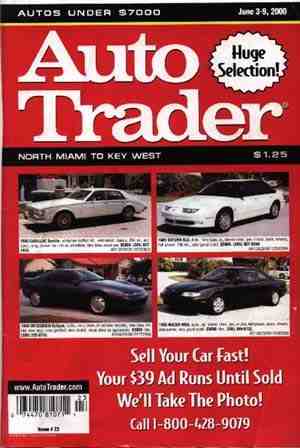
It is the one of Canada's largest new and used car classified site offering new & used cars, boats, RVs, construction vehicles, motorcycles and etc. It provides vehicles for sale in Canada for each province and users can pick the location. Unlike eBay or used regina, Autotrader requires a payment before we can put the sale item from a week / 2 weeks / a month. Payment varies depending on the duration.
Potential Benefits:
- We can search cars in other provinces and look for the same cars and compare prices and find a cheaper price at home.
- Have more choices than going to a certain car dealership to get a car. We can communicate with a bigger group of people in Canada than just selling a car within a city.
- We see the car through pictures online, we would not know if there is a damage on the body.
- If the car is too far away from where we live, we can't really go there and test drive it.
- Some cars that are already sold are still on the website. Waste of time if we call them.
- Not all people on the Aututrader are professional sellers.
Potential Risks and Disadvantages:
Better and Safer Way's to Shop Online
One safe way to online shop is not using online bidding sites but more so an online listing site. For example usedregina.com or kijiji.com websites like these are more on a personal level, they don’t enable you to not leave your house because usually you have to pick up the paid for item but it does give one the opportunity too browse online in the comfort of their home.
Tips:
- Make sure you are on a "secure" site before you give your name, address or credit card details. Look for a padlock or a key symbol, which are usually in the bottom corner of your screen. On a secure site, your information is scrambled into code, (encrypted) before being sent over the Internet, and stored on a secure database. If the company want to pass on your details to other companies, it should give you the right to say no. Look for a tick box on the site, and make a choice about disclosing your details.
- Do not send your credit card details in an email, this is not a secure means of transmitting information and can be copied easily to others.
- Check your credit card statements for suspicious entries. If you spot anything shady, query the transaction and consider cancelling that card.
- Keep records of all your transactions. Print details from the webpage you used, write down records of order numbers and billing address. Keep copies of any emails you exchange with the supplier.
- Think before you buy. If the online advertisement or junk email offer sounds too good to be true, it probably is!
- Remember the hidden extras, which can push up the price of your online purchase. Postage and packing costs, VAT and Customs charges for goods from overseas can add greatly to the final cost.
- If you do have problems with an online purchase, contact your local council's Trading Standards office for their specific advice. You can involve the police too if a fraud has taken place.
The tips above, can be summed up into these 5 general 'rules' of online shopping
1. Know your Merchant:
It's a good practice to be familiar with the name or reputation of any company you're dealing with. You can often find helpful information about online companies from Internet news sources, directories, and rating services. The Federal Trade Commission maintains a web site (http://www.consumer.gov) that provides many buyer's guides, lists of tips, and links to helpful resources. (Famous online shopping websites post relevant information about themselves and their business on an "Information" page. they also provides a rating system, whereby customers are able to evaluate merchants. If you see this symbol next to a listing, it means that the merchant has provided "top rated" service to customers.)
2. Protect your privacy:
Know what information the merchant is collecting about you, how it will be used, and if they share it with or sell it to others. You can do this by checking the web site to make sure there is a privacy policy posted, and that you're comfortable with the way your personal information is treated under that policy. Look for seals from privacy enforcement organizations like TRUSTe or BBBOnline. Be cautious if you're asked to supply personal information not needed to make a purchase, such as your Social Security number or personal bank account information. (We post a link to our Yahoo! Privacy Policy at the bottom of most Yahoo! pages. In our policy, written in collaboration with the TRUSTe organization, we explain when and where we collect personal information, and how we use it. )
3. Get the Details:
Check for expected delivery dates, shipping and handling fees, warranties, return policies, and other important information. Look for an email address to write to (or a phone number to call) if you have a question, a problem, or if you need help.4. Use a Credit Card and Safeguard Your Password:
It's a good practice to pay with credit cards, because under federal law (and your credit card agreement) your liability for an unauthorized charge is limited to $50. When using a credit card online, look for an unbroken key or padlock (a graphical icon usually located in the bottom corner of the web page), or for a policy that indicates use of strong security technology such as SSL. This indicates that your credit card data is transmitted securely. Keep your passwords safe, and don't share them with other people.5. Keep Good Records:
Make sure to print or save electronically any records related to your online transactions. This will help you keep track of shipping dates, shipping and handling fees, and other details of your transactions.Useful Website:
Be safe online
Safer Online Shopping
Statistics
More Canadians are shopping on-line: Statistics Canada
- Canadians spent $12.8 billion on Internet purchases in 2007--a 61 percent increase compared with 2005.
- The actual number of on-line orders jumped by 20 million during the two-year period, from 49.4 million orders in 2005 to 69.9 million in 2007.
- The most popular items purchased on the Net were travel services and entertainment products, such as books, concert tickets, and clothing.
- In terms of age, the demographic that placed the most on-line orders included those between 25 and 34.
History Of Online Shopping
History Of Online Shopping: Online shopping actually dates back a lot further than most people would realize, it seems like more of a new millennium thing when really it dates back to the mid 1980’s. In 1990 Tim Berners-Lee created the first World Wide Web server and browser. By 1994 online shopping had grown immensely and there were advances like online banking and the opening of an online Pizza Hut also during 1994, Netscape introduced SSL encryption of data transferred online, which has made online shopping secure. In 1995 Amazon expanded their online market which is now one of the biggest online stores. In 1996 eBay was introduced which was basically the first well known online bidding and selling website, this would be the first of many similar to its kind to come.
Future of Online Shopping Videos:
http://www.youtube.com/watch?v=PkW1vOWtDsI&feature=related
A Paradigm Shift:

This benefits and hurts retailers at the same time. The obvious major benefit, is labor costs are cut, employee’s spend less time with customers over-all, and it reduces the need for as many employees. The downside to this, is, the lack of “impulse” buy’s that people making online purchases will find. For example, the candy rack next to the cash register, isn’t there in an online store. As well, in many cases, People tend to buy less add-ons. For example, Buying a TV online, a person will buy a tv, Buying a TV in a store, after talking to an employee, will likely leave with more than just the TV, (TV stand, dvd player etc.)
As far as being advantageous for the shopper, They do not need to leave their homes, except to possibly pick up the item they are purchasing, however many retailers have ‘next day delivery’ which will bring the purchase to the customers door. This phase-shift with the way people shop, is an incredible demonstration of the power of technology, and the internet. And with more and more retailers offering their products online, hundreds of new products are available online every day. More and more, shopping is moving from the store, to the living room.
Statistics:
http://www.multilingual-search.com/world-statistics-on-the-number-of-internet-shoppers
-Among Internet users with Internet access using it shop, the highest percentage shopping online is found in:
South Korea (99%)
UK (97%)
Germany (97%)

Japan (97%)
US (94%)
-The most popular and purchased items are:
Books (41% purchased in the past three months)
Clothing/Accessories/Shoes (36%)
Videos / DVDs / Games (24%)
Airline Tickets (24%)
Electronic Equipment (23%)
- Over 875 Million Consumers Have Shopped Online - the Number of Internet Shoppers Up 40% in Two Years.